Friday, September 10, 2021 – THREE BROTHERS WHO FLOURISHED AS AMERICAN ARTISTS

FRIDAY, SEPTEMBER 10, 2021
The
464th Edition
THE ART OF
RAPHAEL, MOSES
AND
ISAAC SOYER
SMITHSONIAN AMERICAN ART
MUSEUM
RAPHAEL SOYER
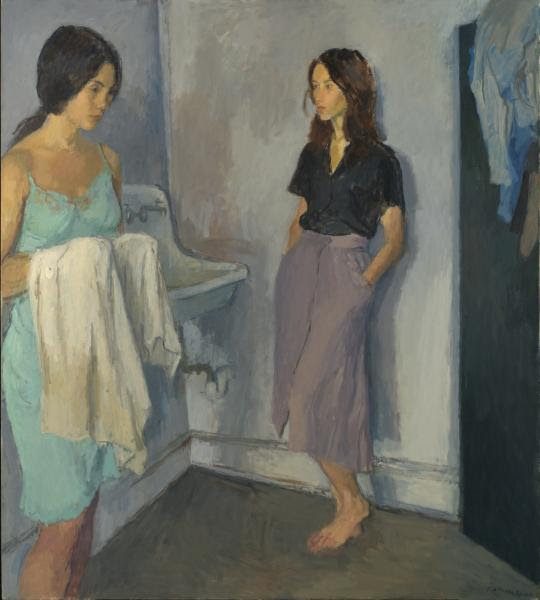
- Raphael Soyer, Annunciation, 1980, oil on linen, Smithsonian American Art Museum, Gift of the Sara Roby Foundation, 1986.6.98
- Raphael Soyer once said, “If art is to survive it must describe and express people, their lives and times. It must communicate.” Throughout his life, Soyer explored the inner individual. Annunciation is a quiet painting of two young women caught in a moment of introspection. The biblical title, which refers to the moment when an angel tells the Virgin Mary that she will bear the Messiah, is a clue to an implied meaning about regeneration and the mystery of life.
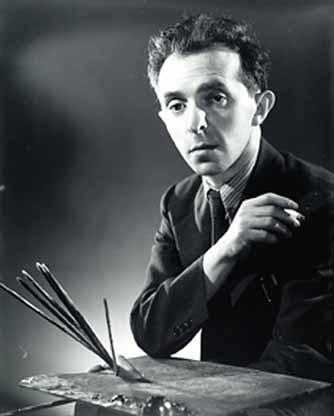
Painter and printmaker, a twin brother of artist Moses Soyer. His sympathetic and melancholic paintings expressed the aspirations and disappointments of ordinary people. He frequently painted himself and other artists, Homage to Thomas Eakins (1964–65) being one such work.
Joan Stahl American Artists in Photographic Portraits from the Peter A. Juley & Son Collection (Washington, D.C. and Mineola, New York: National Museum of American Art and Dover Publications, Inc., 1995)
Raphael Soyer was a painter, draughtsman, and printmaker who believed that “if art is to survive, it must describe and express people, their lives and times. It must communicate.” From an early age Soyer and his brothers Moses and Isaac were encouraged to draw by their father, a teacher of Hebrew literature and history. Forced to leave Russia in 1912, they immigrated to the United States and settled in Brooklyn. In the mid 1920s, having studied at Cooper Union, the National Academy of Design, and the Art Students League, Soyer painted scenes of life on New York’s east side. His portrayals of derelicts, working people, and the unemployed around Union Square during the Depression reveal more of a poignant vision of the human condition than the art of social protest popular with many of his contemporaries. Throughout his life Soyer painted people—his friends, himself, studio models—with an unerring eye for intimacy and mood.
Virginia M. Mecklenburg Modern American Realism: The Sara Roby Foundation Collection (Washington, D.C.: Smithsonian Institution Press for the National Museum of American Art, 1987)
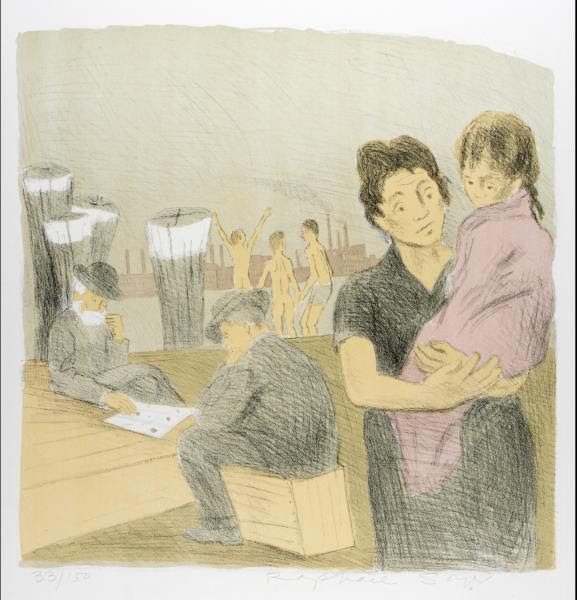
Raphael Soyer, (Memories, portfolio) The Pier, 1969, color lithograph, Smithsonian American Art Museum, Museum purchase, 1969.74.6
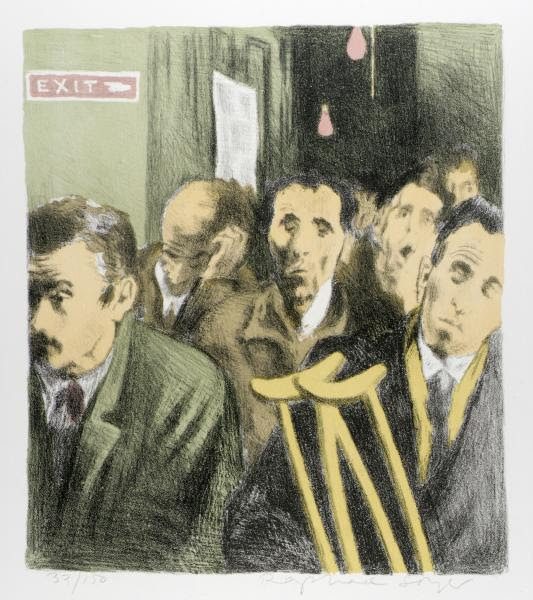
Raphael Soyer, (Memories, portfolio) Unemployed, 1969, color lithograph, Smithsonian American Art Museum, Museum purchase, 1969.74.9
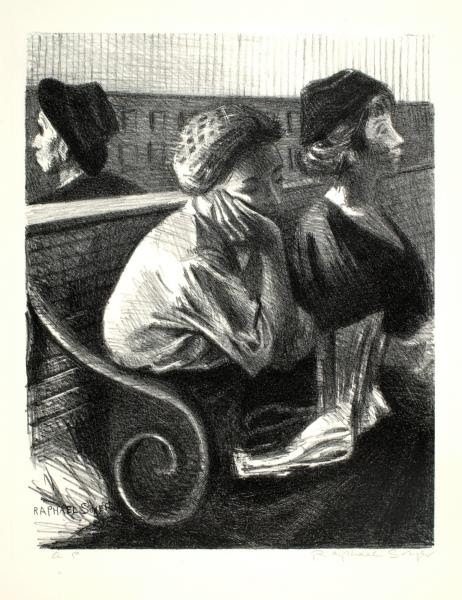
Raphael Soyer, Railroad Waiting Room, n.d., lithograph, Smithsonian American Art Museum, Gift of Frank McClure, 1970.85
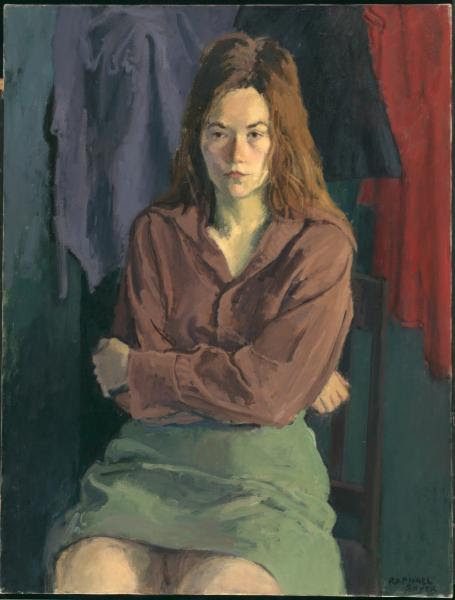
Raphael Soyer, Rosemary in Thought, 1975, oil on canvas, Smithsonian American Art Museum, Bequest of Henry Ward Ranger through the National Academy of Design, 1999.77
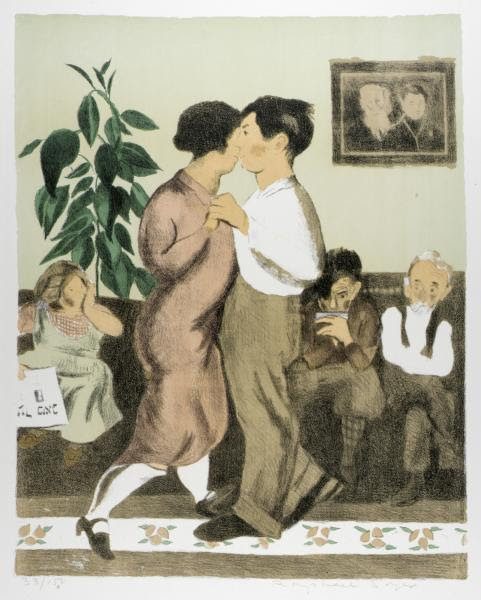
Raphael Soyer, (Memories, portfolio) Dancing Lesson, 1969, color lithograph, Smithsonian American Art Museum, Museum purchase, 1969.74.7
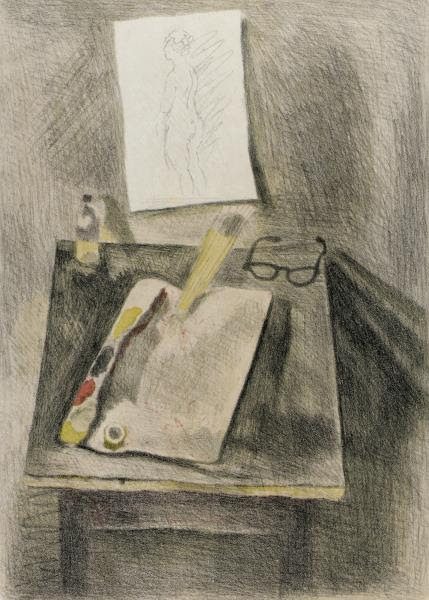
Raphael Soyer, (Memories, portfolio) Still Life, 1969, color lithograph, Smithsonian American Art Museum, Museum purchase, 1969.74.12
MOSES SOYER
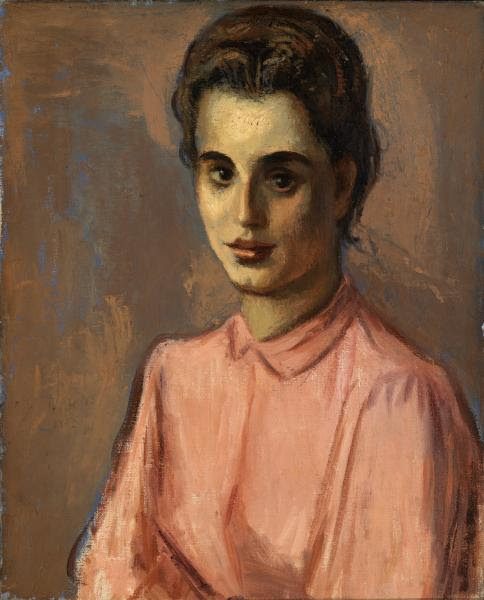
Moses Soyer, Woman in Pink Blouse, n.d., oil on canvas, Smithsonian American Art Museum, Gift of Emil J. Arnold, 1967.56.5
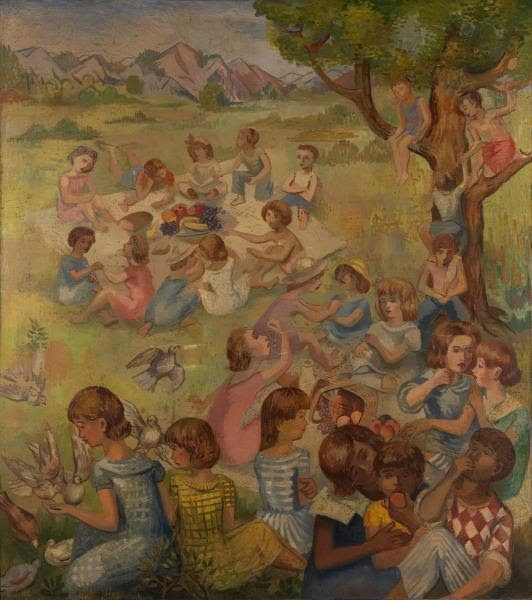
Moses Soyer, Children at Play and Sport I, ca. 1938, oil on canvas, Smithsonian American Art Museum, Transfer from the General Services Administration, 1974.89.2
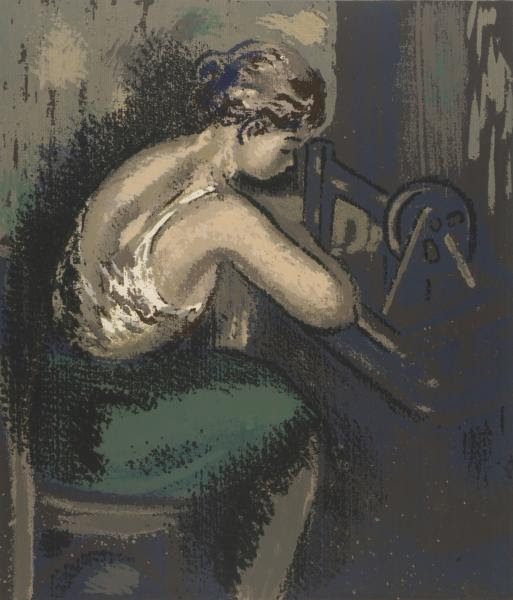
Moses Soyer, Seamstress, ca. 1940, screenprint on paper, Smithsonian American Art Museum, Museum purchase, 1980.17.6
ISAAC SOYER
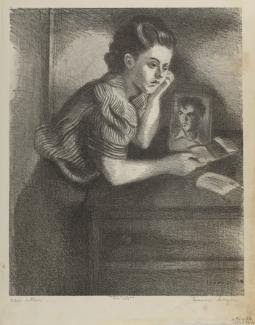
Isaac Soyer, The Letter, n.d., lithograph, Smithsonian American Art Museum, Transfer from D.C. Public Library, 1967.72.241
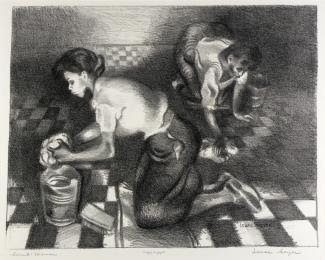
Isaac Soyer, Scrubwomen, n.d., lithograph, Smithsonian American Art Museum, Transfer from D.C. Public Library, 1967.72.242
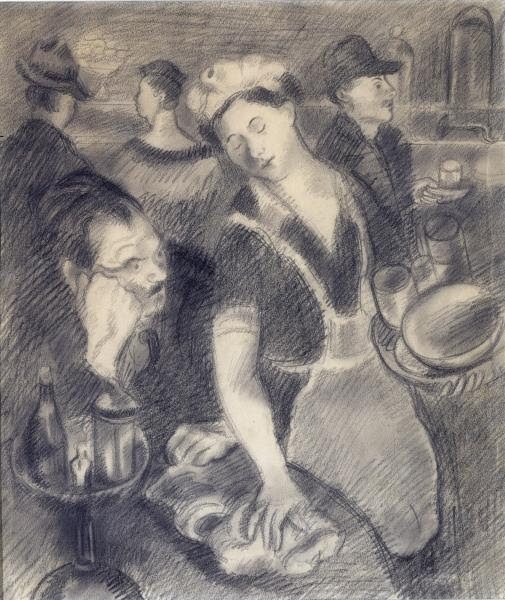
- Isaac Soyer, The Waitress, ca. 1934-1939, pencil on paper, Smithsonian American Art Museum, Transfer from the Evander Childs High School, Bronx, New York through the General Services Administration, 1975.83.111
Soyer captures a waitress cleaning the table of a man dining alone. Around them customers bustle and converse and dishes clank, but the artist isolates the two figures from their surroundings. They are engrossed in private thoughts despite their physical proximity.The Waitress“The artist discovers beauty and meaning in whatever environment he is cast by chance,” Soyer wrote in 1947. For him, the place was New York City, where he drew scenes of everyday life. In
Graphic Masters II: Highlights from the Smithsonian American Art Museum, 2009
FRIDAY PHOTO OF THE DAY
SEND YOUR SUBMISSION
TO ROOSEVELTISLANDHISTORY@GMAIL.COM
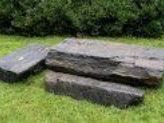
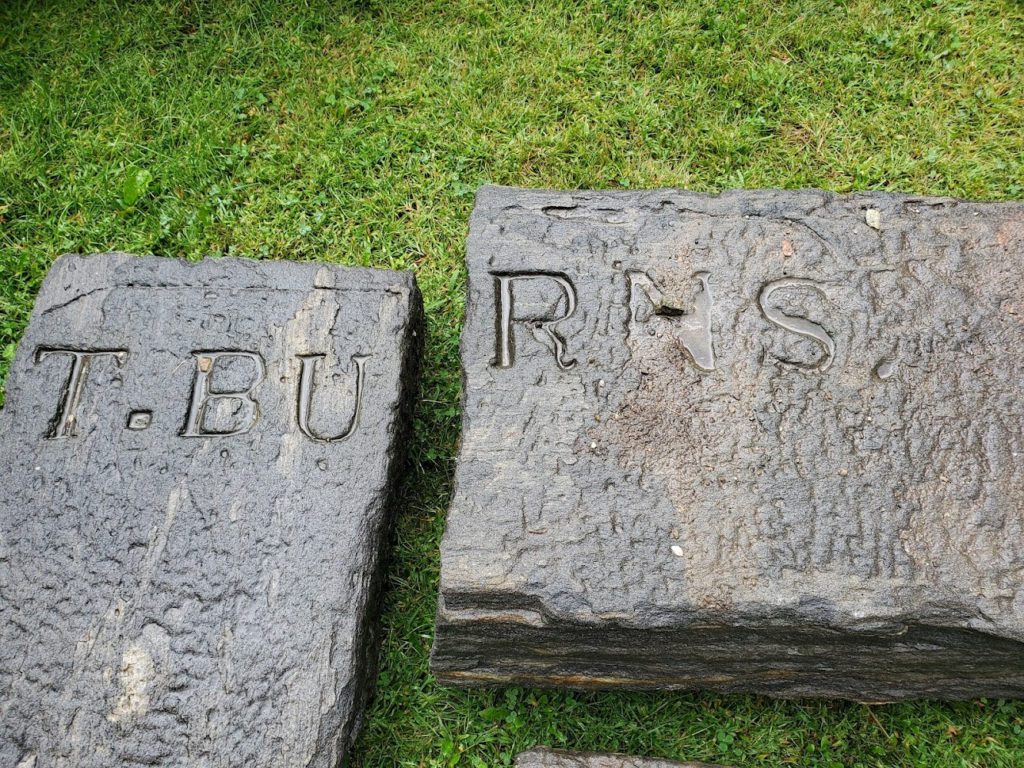
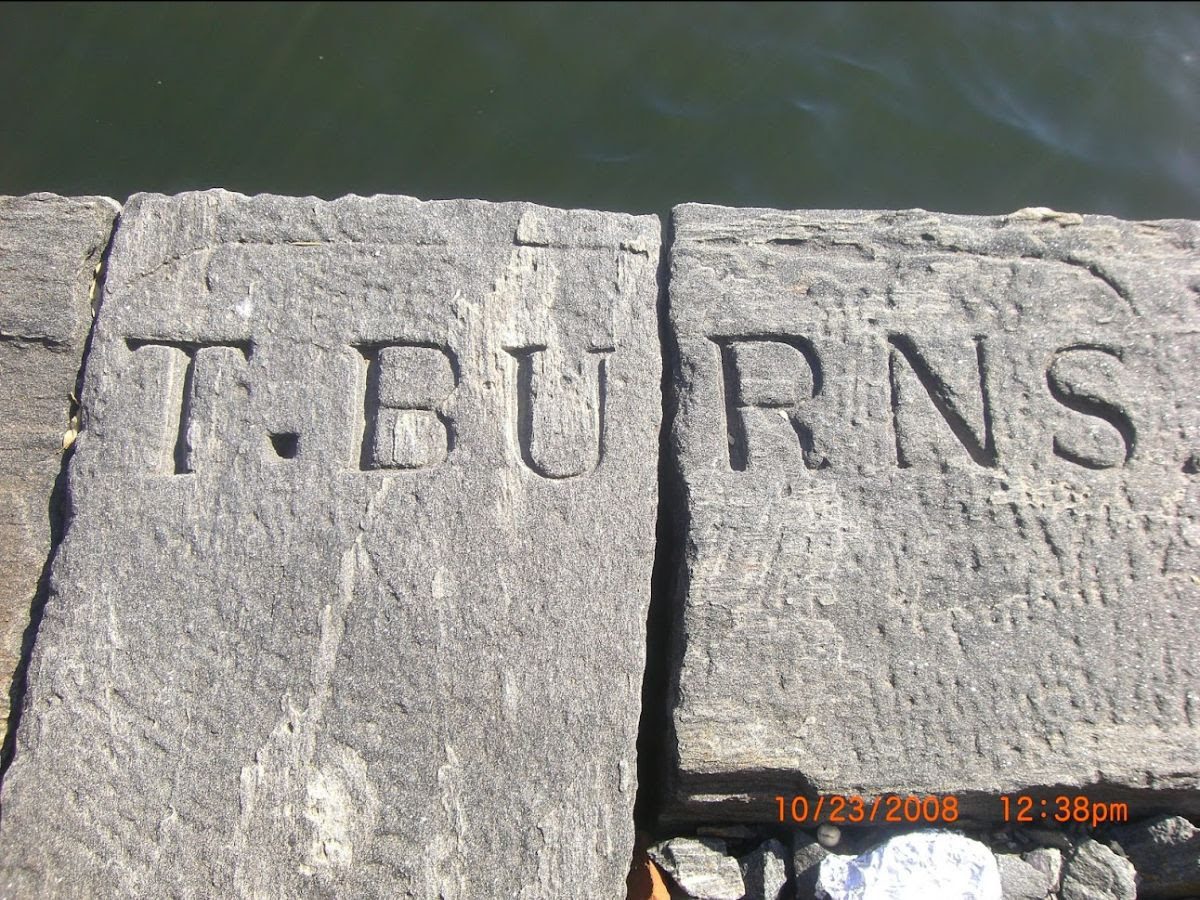
RIOC DELIVERED THE T. BURNS STONES TODAY TO THE RIHS VISITOR CENTER. STAY TUNED FOR DETAILS OF OUR DEDICATION OF THESE STONES.
THURSDAY PHOTO OF THE DAY
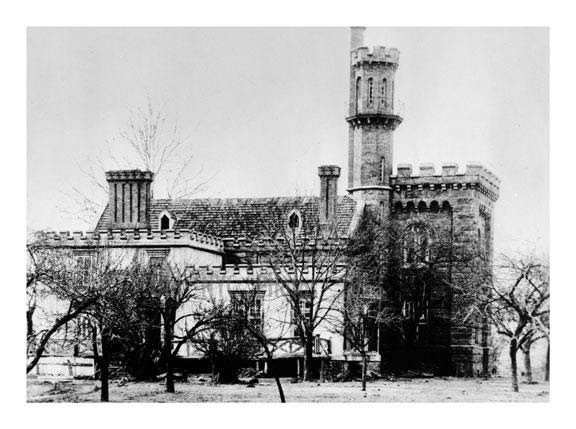
THE BODINE CASTLE
43-16 VERNON BLVD
ED LITCHER AND CLARA BELLA GOT IT RICHT!
No, it’s not the Adams Family home. This was the famous granite castle built by John Bodine (1818-1887), a wealthy wholesale grocer. It was built in 1853, only 200 feet from the East River. Bodine ran for mayor of Long Island City — unsuccessfully — in 1876, but was made one of the first trustees of the Long Island City Savings Bank. After the death of his wife in 1879 he lost interest in the home and rented it to Harold Larsen of the Long Island Paint Works.
After Bodine’s death his son sold it to Young and Metzer’s paper bag company in 1893. Early in the 20th century it was bought by William Youngs and Brothers, who turned the property into a lumberyard and mill, using the house for offices. William Youngs (1892-1978) had a successful lumber operation as LIC was growing into an industrial city. Youngs never lived in LIC. By the 1950s when the building boom ended he merged with another lumberyard and the firm became stronger as the Youngs-Esdorn Lumber Co. By 1962, an expanding Con Edison made him an offer he could not refuse. In 1966 the Landmarks Preservation Commission, which usually doesn’t save anything outside Manhattan, sided with Con Edison that the castle was not valuable for landmark status. It was quietly demolished on May 11, 1966 without media attention or protests. Today the site is part of a high-tension switching station.
Text by Judith Berdy
Thanks to Bobbie Slonevsky for her dedication to Blackwell’s Almanac and the RIHS
Thanks to Deborah Dorff for maintaining our website
Edited by Melanie Colter and Deborah Dorff
All image are copyrighted (c)
SMITHSONIAN AMERICAN ART MUSEUM
FUNDING PROVIDED BY ROOSEVELT ISLAND OPERATING CORPORATION PUBLIC PURPOSE GRANTS CITY COUNCIL REPRESENTATIVE BEN KALLOS DISCRETIONARY FUNDING THRU DYCD


Copyright © 2021 Roosevelt Island Historical Society, All rights reserved.Our mailing address is:
rooseveltislandhistory@gmail.com