Weekend, July10-11, 2021 – A WPA ARTIST WHOSE JOYFUL ART IS MEMORABLE


JULY 10-11, 2021
OUR 412TH EDITION
JOSEPHINE JOY
ARTIST
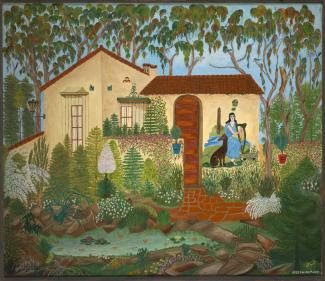
- Josephine Joy, Irish Cottage, ca. 1935-1938, oil on canvas, Smithsonian American Art Museum, Transfer from the Newark Museum, 1966.31.8
- This quaint Irish cottage was probably inspired by romantic illustrations of Ireland that appeared in American travel brochures and books. The lady playing a harp, however, is based on the symbol of the Society of United Irishmen, an organization formed in 1791 to rebel against British control. Their badge combined a harp (Ireland’s national icon), with the motto: “It is new strung and shall be heard.”
Josephine Hiett Joy was born near Harpers Ferry, West Virginia, in 1869 and soon thereafter her family moved to Peoria, Illinois. After an early marriage that ended in divorce, she went to Chicago and subsequently married Frank Joy. She became interested in painting after they moved to San Diego. A prolific worker, she became a WPA artist in the late 1930s, which led to her first solo exhibition at the Galerie St. Etienne in New York City in 1943. Joy died in Peoria in 1948.
Josephine Joy was born Sally Hiett, but changed her name when she was sixteen years old. As a young woman, she lived in Chicago and Denver before settling in San Diego, California, with her husband. It was there that she began to paint, creating images of flowers and landscapes, and she particularly enjoyed sketching animals at the San Diego Zoo. During the Great Depression, Joy worked with the California Art Project of the Works Progress Administration (WPA), which helped bring national attention to her work. In the spring of 1943, she held her first one-woman show at the Galerie St. Etienne in New York, which received considerable praise from critics.
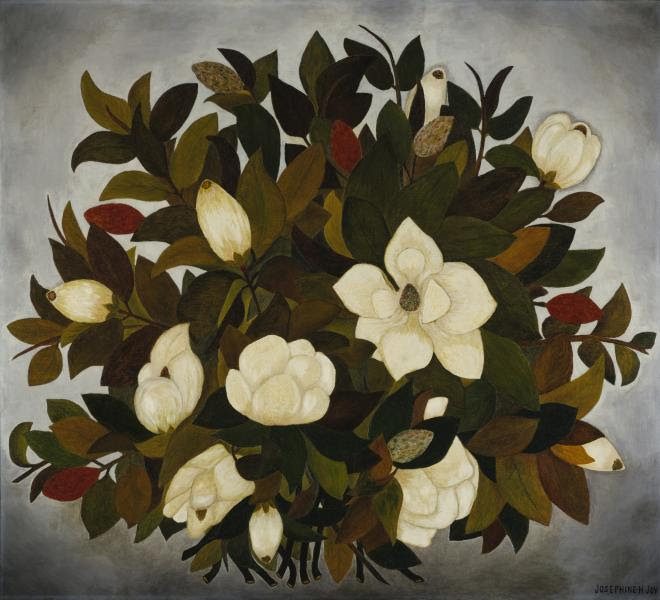
Josephine Joy, Magnolia Blossoms, ca. 1935-1941, oil on canvas, Smithsonian American Art Museum, Transfer from General Services Administration, 1971.447.44
Josephine Joy grew up on an Illinois farm, where she loved to sketch birds, trees, and flowers. Circumstances prevented her from following her artistic calling until 1927, after her children were grown and her husband had died. Joy lived in California then, and the WPA’s California Art Project afforded her the opportunity to work gainfully as an artist. In the 1930s, “non-academic” painters were increasingly celebrated alongside their professional peers. By the early 1940s, Joy was a nationally acclaimed painter whose work had been featured in a solo exhibition at the Museum of Modern Art in New York.
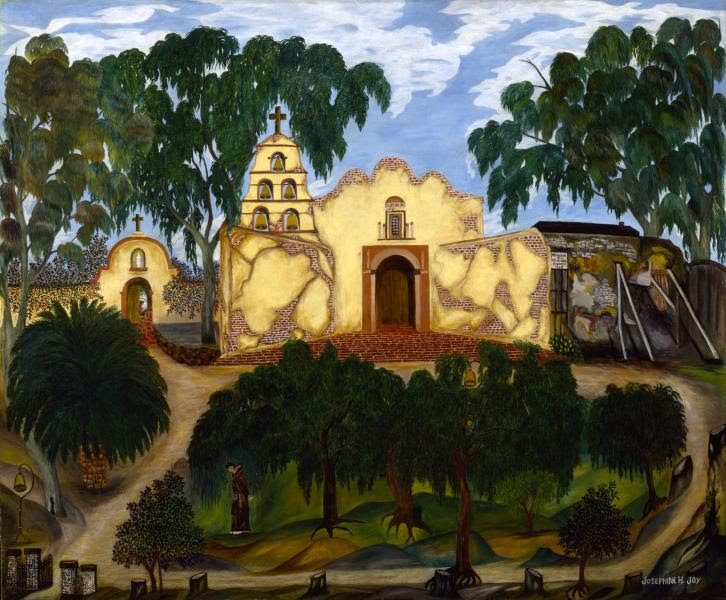
- Josephine Joy, San Diego Mission, ca. 1935-1939, oil on fiberboard, Smithsonian American Art Museum, Transfer from General Services Administration, 1971.447.45
- Josephine Joy’s paintings combine direct observation and imaginative design. This is especially evident in this painting of the Mission San Diego de Alcala, the first of California’s twenty-one missions. Founded in 1769, the building underwent renovations in 1931. Certain features of San Diego Mission are drawn from the renovation, while others appear much older. The newly built bell tower contrasts with the cracked and exposed brick and the aged building to the right. Joy painted San Diego Mission while working with the WPA’s Southern California Art Project in Los Angeles from 1936 to 1939.
“I love to paint in the open, sitting in some beautiful garden, hillside or remote place or in Balboa Park [in San Diego], where I had sketched many pictures … I paint from nature but occasionally I find myself designing.” The artist, quoted in Cat and a Ball on a Waterfall: 200 Years of California Folk Painting and Sculpture, 1986
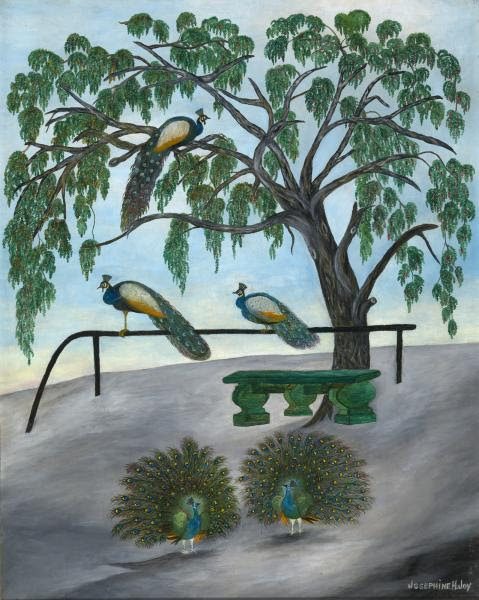
- Josephine Joy, Trysting at Evening, ca. 1935-1939, oil on fiberboard, Smithsonian American Art Museum, Transfer from General Services Administration, 1971.447.39
- This painting may have been inspired by a sketch Josephine Joy made on one of her trips to the San Diego Zoo. The bench and railing in the image imply that this scene is a part of some man-made environment. The two peacocks in the foreground spread their trains to the fullest, displaying the bright colors of their plumage, and lift their chins in an attempt to attract a mate. The three birds perched on the railing and in the tree, however, ignore this elaborate show. In nature, the male peacocks are more brightly colored than female peahens, but here the artist shows them all to be more similarly colored.
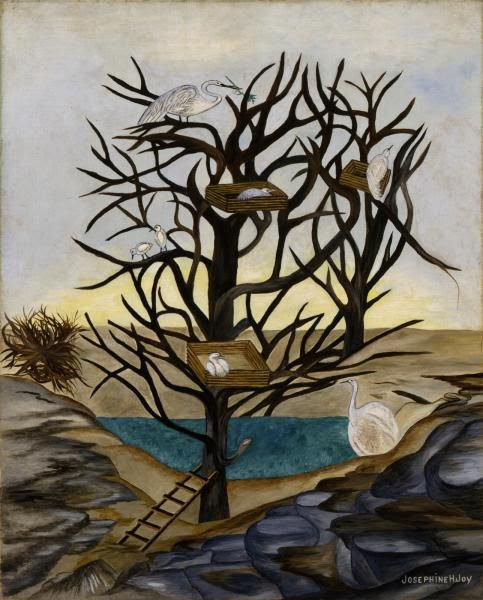
Josephine Joy, Waterbirds Nesting, ca. 1935-1939, oil on canvas, Smithsonian American Art Museum, Transfer from General Services Administration, 1971.447.42
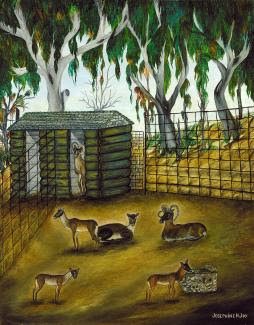
Josephine Joy, Moufflon–Bobtailed Sheep, ca. 1935-1939, oil on canvas, Smithsonian American Art Museum, Transfer from General Services Administration, 1971.447.40
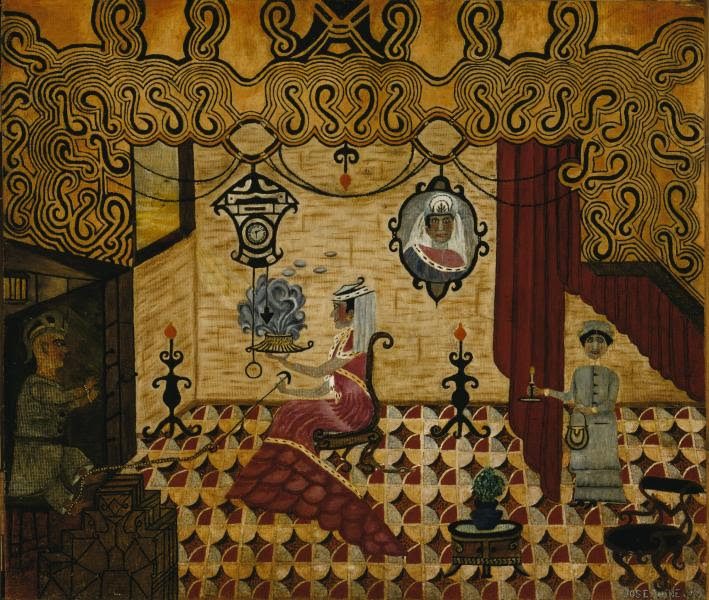
Josephine Joy, Prisoner’s Plea, ca. 1935-1937, oil on fiberboard, Smithsonian American Art Museum, Transfer from General Services Administration, 1971.447.38
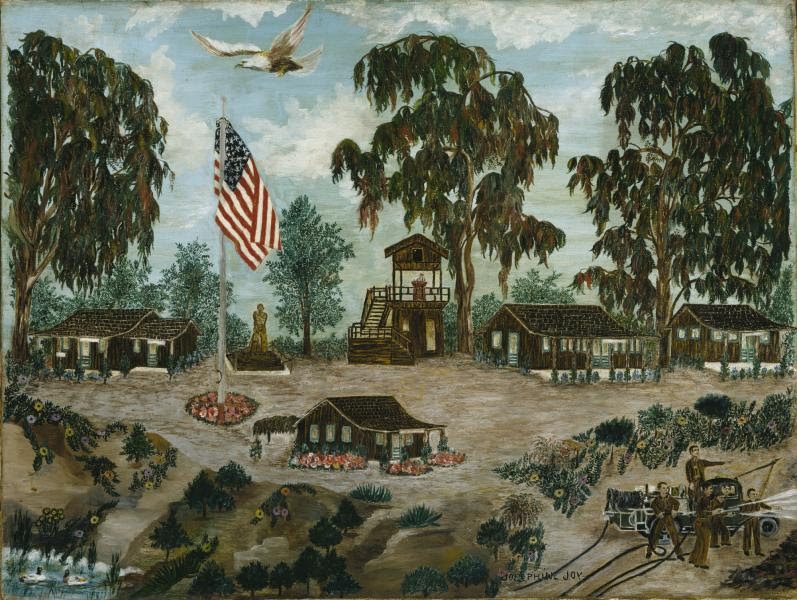
Josephine Joy, CCC Camp Balboa Park, ca. 1933-1937, oil on canvas, Smithsonian American Art Museum, Transfer from General Services Administration, 1971.447.41
WEEKEND PHOTO OF THE DAY
SEND YOUR SUBMISSION TO:
ROOSEVELTISLANDHISTORY@GMAIL.COM
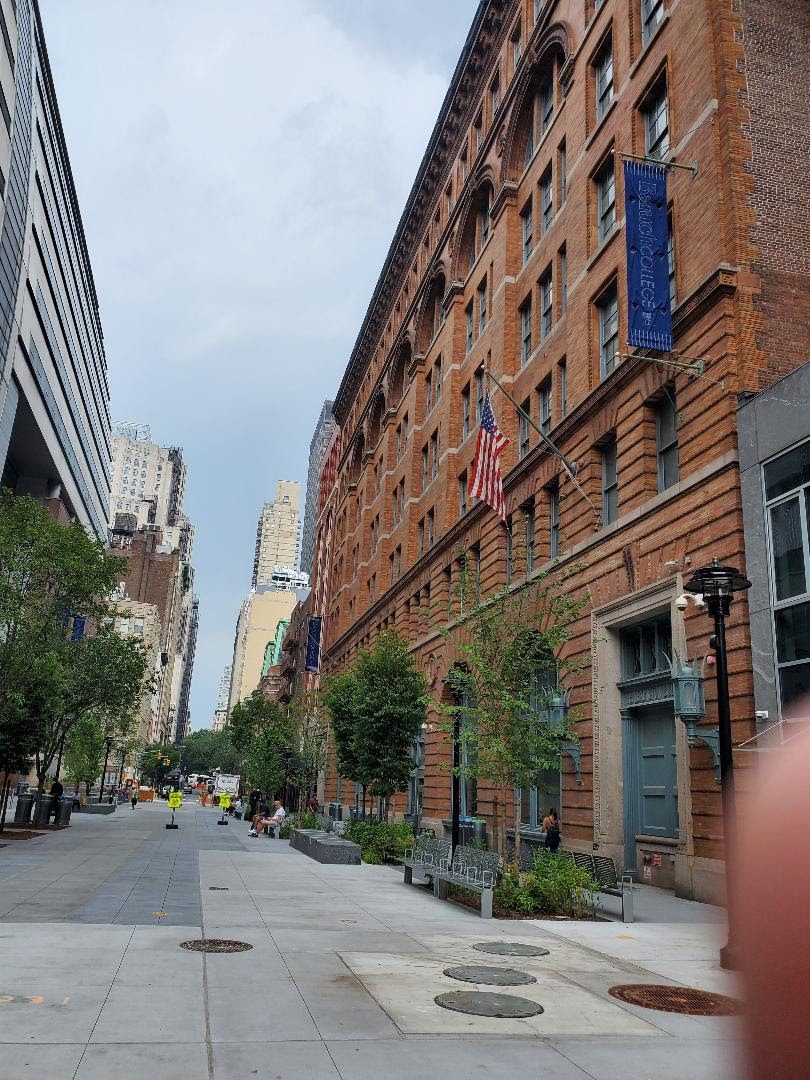
FRIDAY PHOTO OF THE DAY
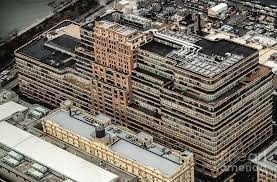
STARRETT – LEHIGH BUILDING
The Starrett–Lehigh Building at 601 West 26th Street, between Eleventh and Twelfth Avenues and between 26th and 27th Streets in Chelsea, Manhattan, New York City, is a full-block freight terminal, warehouse and office building. It was built in 1930–31 as a joint venture of the Starrett Corporation and the Lehigh Valley Railroad on a lot where the railroad had its previous freight terminal, and was designed by the firm of (Russell G.) Cory & (Walter M.) Cory, with Yasuo Matsui the associate architect and the firm of Purdy & Henderson the consulting, structural engineers. When William A. Starrett died in 1932, the Lehigh Valley Railroad bought the building outright, but by 1933 it was a losing proposition, with a net loss that year of $300,000. The Starrett–Lehigh Building was named a New York City landmark in 1986,[1] and is part of the West Chelsea Historic District, designated in 2008
NINA LUBLIN, ROBIN LYNN, ARON EISENPREISS, ANDY SPARBERG,
ED LITCHER (WHO SENT THE HISTORY),
Text by Judith Berdy
Thanks to Bobbie Slonevsky for her dedication to Blackwell’s Almanac and the RIHS
Thanks to Deborah Dorff for maintaining our website
Edited by Deborah Dorff
Roosevelt Island Historical Society
All image are copyrighted (c) Roosevelt Island Historical Society unless otherwise indicated
SMITHSONIAN AMERICAN ART MUSEUM
FUNDING PROVIDED BY ROOSEVELT ISLAND OPERATING CORPORATION PUBLIC PURPOSE GRANTS CITY COUNCIL REPRESENTATIVE BEN KALLOS DISCRETIONARY FUNDING THRU DYCD


Copyright © 2021 Roosevelt Island Historical Society, All rights reserved.Our mailing address is:
rooseveltislandhistory@gmail.com