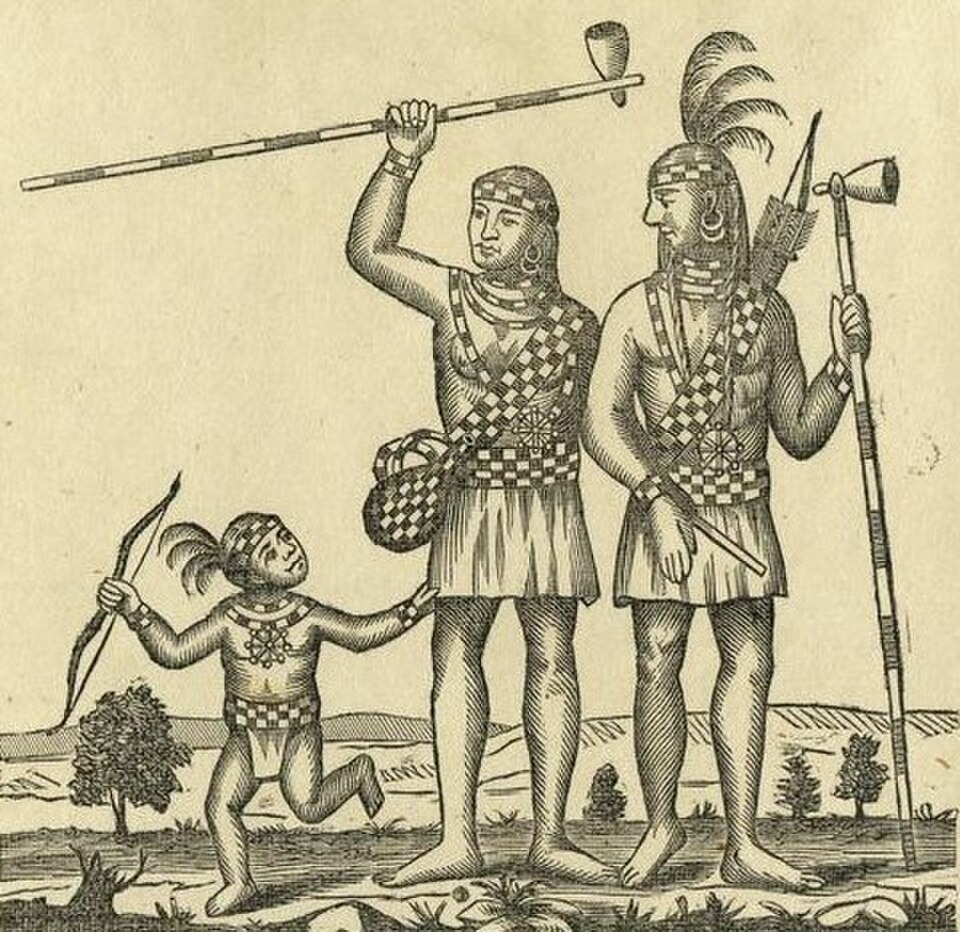
BEFORE 1637
MinnahanonckLenape
A fishing and hunting ground in the tidal strait the Dutch would come to call Hell Gate.
Lenape fishing ground, Dutch hog farm, Blackwell family estate, penitentiary, asylum, smallpox hospital, Welfare Island, and now a neighbourhood of 12,000. We keep the record — and we'll show you around.
Plan your visit
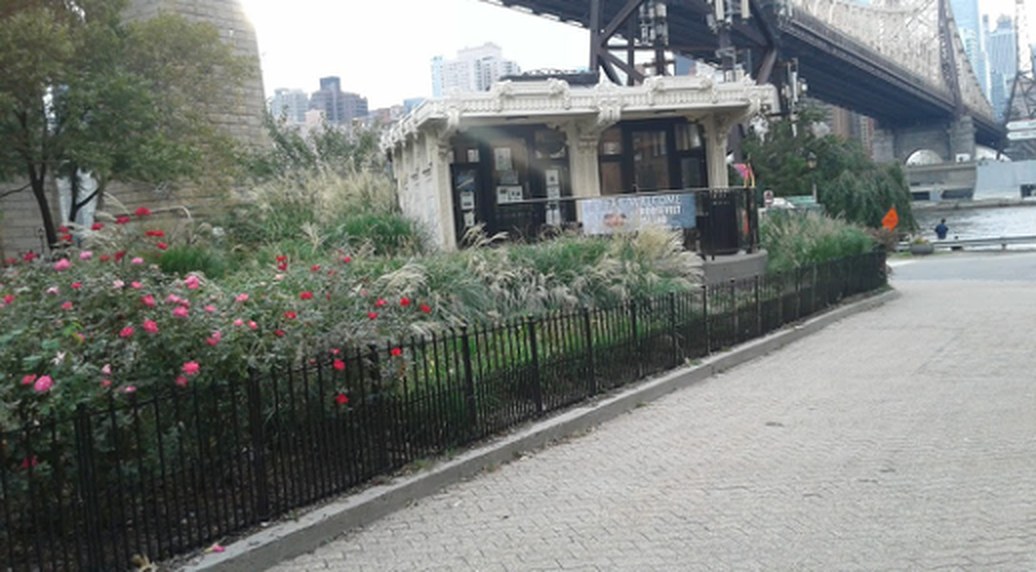
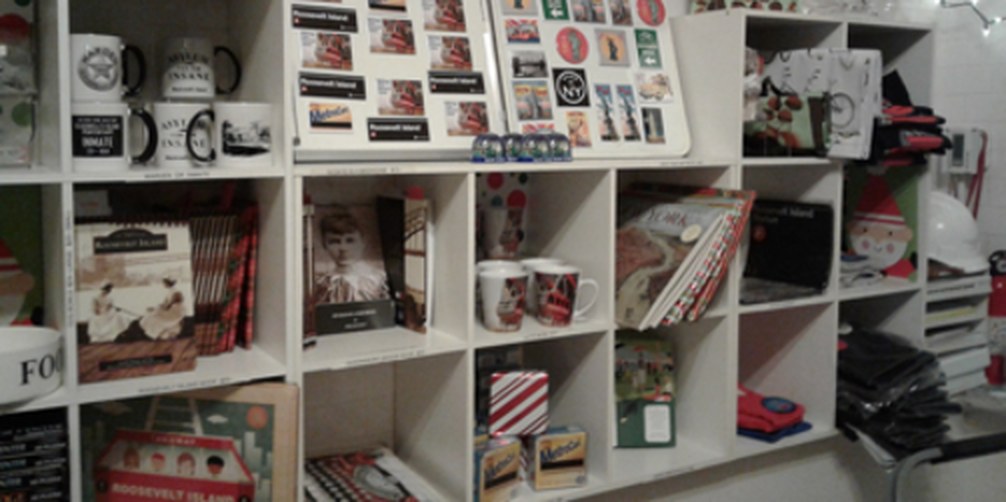
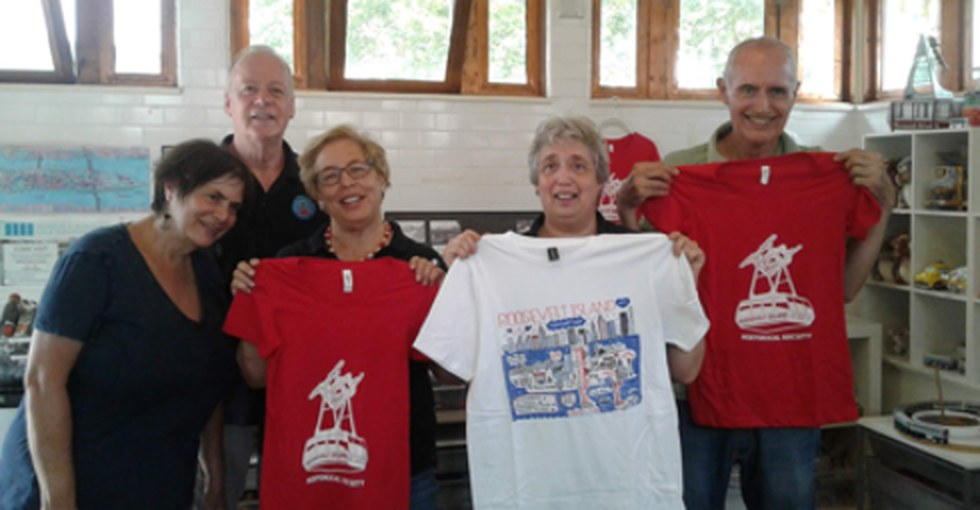
The 1930s trolley kiosk at Tram Plaza has been our Visitor Center since 2007. Walk in for maps, directions, island history, and a small shop run entirely by volunteers. No ticket, no appointment.
All times Eastern.
| Sunday | 12:00 – 5:00 p.m. |
|---|---|
| Monday | 12:00 – 5:00 p.m. |
| Tuesday | Closed |
| Wednesday | 12:00 – 5:00 p.m. |
| Thursday | 12:00 – 5:00 p.m. |
| Friday | 12:00 – 5:00 p.m. |
| Saturday | 12:00 – 5:00 p.m. |
The kiosk closes in inclement weather. If the sky looks bad, call (917) 744-3721 before you come.
The Roosevelt Island Tram leaves from 2nd Avenue & 59th Street in Manhattan. It takes a MetroCard or OMNY, costs a standard subway fare, and lands you roughly 60 seconds' walk from our door — the kiosk is the little copper-roofed pavilion on the plaza in front of you.
The F train stops at Roosevelt Island. Come up to Main Street, turn north (left, toward the bridge) and walk about five minutes to Tram Plaza.
The NYC Ferry Astoria route stops at East Main Street, just off Tram Plaza. From the landing it is a short walk to the kiosk — one of the best approaches to the island on a clear day.
The free Red Bus loops the island and stops at Tram Plaza. On foot or by bicycle, the Roosevelt Island Bridge connects to 36th Avenue and Vernon Boulevard in Queens and reaches the island beside Motorgate, north of the kiosk.
Address for maps: Tram Plaza, Roosevelt Island, NY 10044 — the kiosk sits directly beneath the Queensboro Bridge.
Credit cards accepted. Members get 10% off everything in the shop.
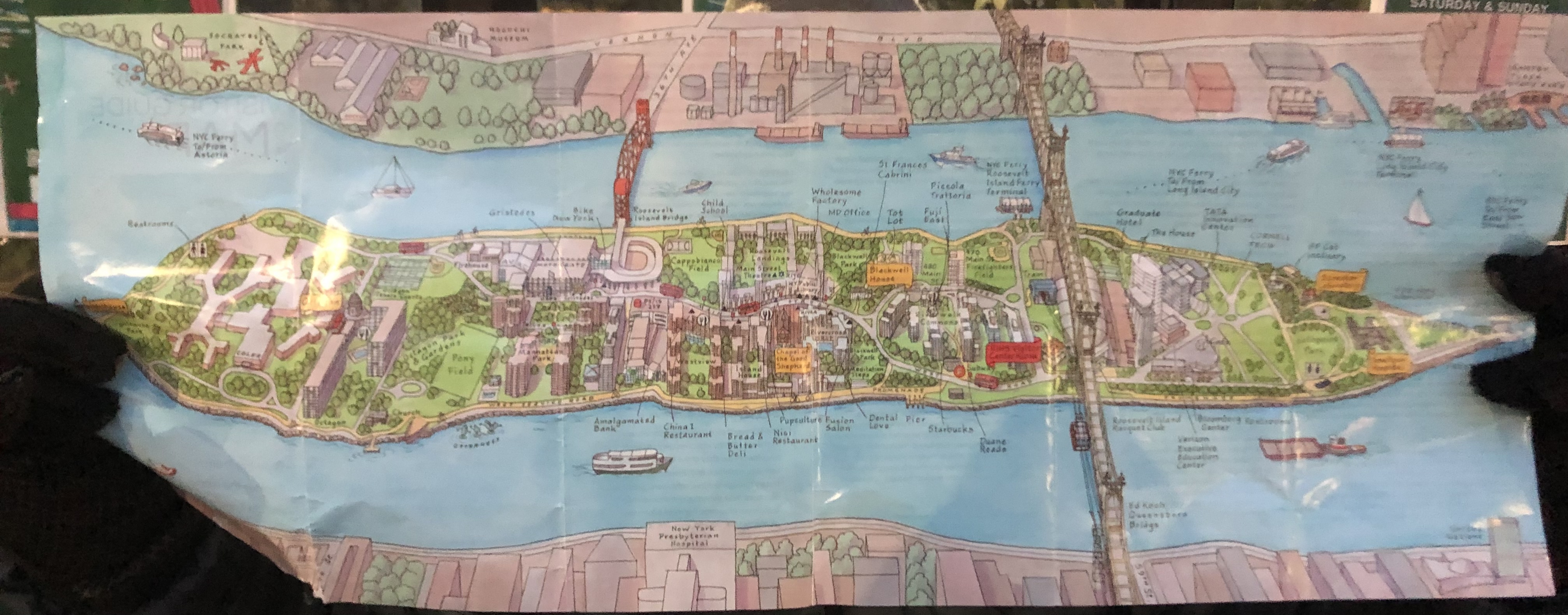
Our self-guided tour covers the island north and south — every landmark, plus the things people walk straight past. Do one half in an hour, or both in an afternoon.
Island history
Roosevelt Island has been renamed almost every time New York changed its mind about what to do with it. That naming history is the fastest way to understand the place.
A fishing and hunting ground in the tidal strait the Dutch would come to call Hell Gate.
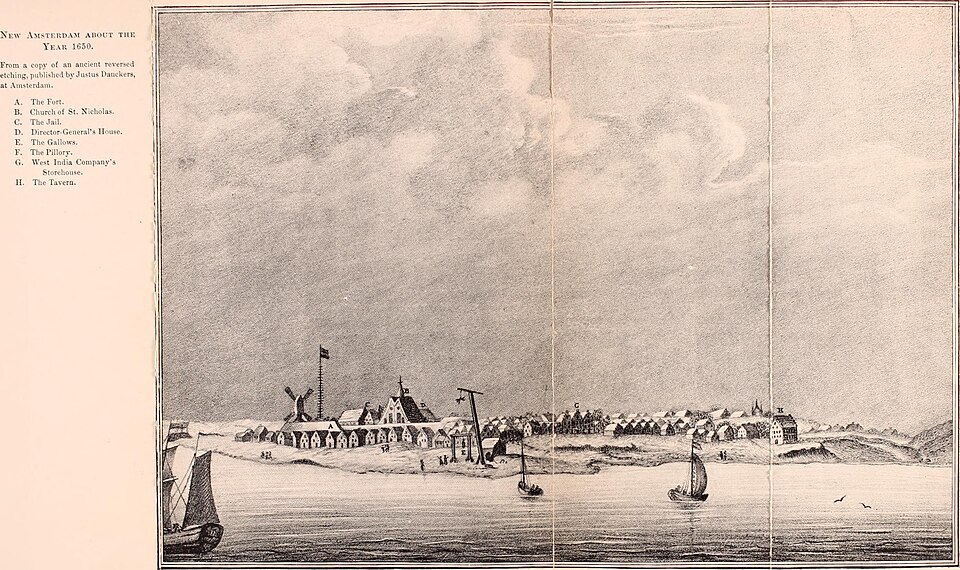
Bought by the Dutch governor Wouter van Twiller and used to pasture pigs, safely away from the mainland.
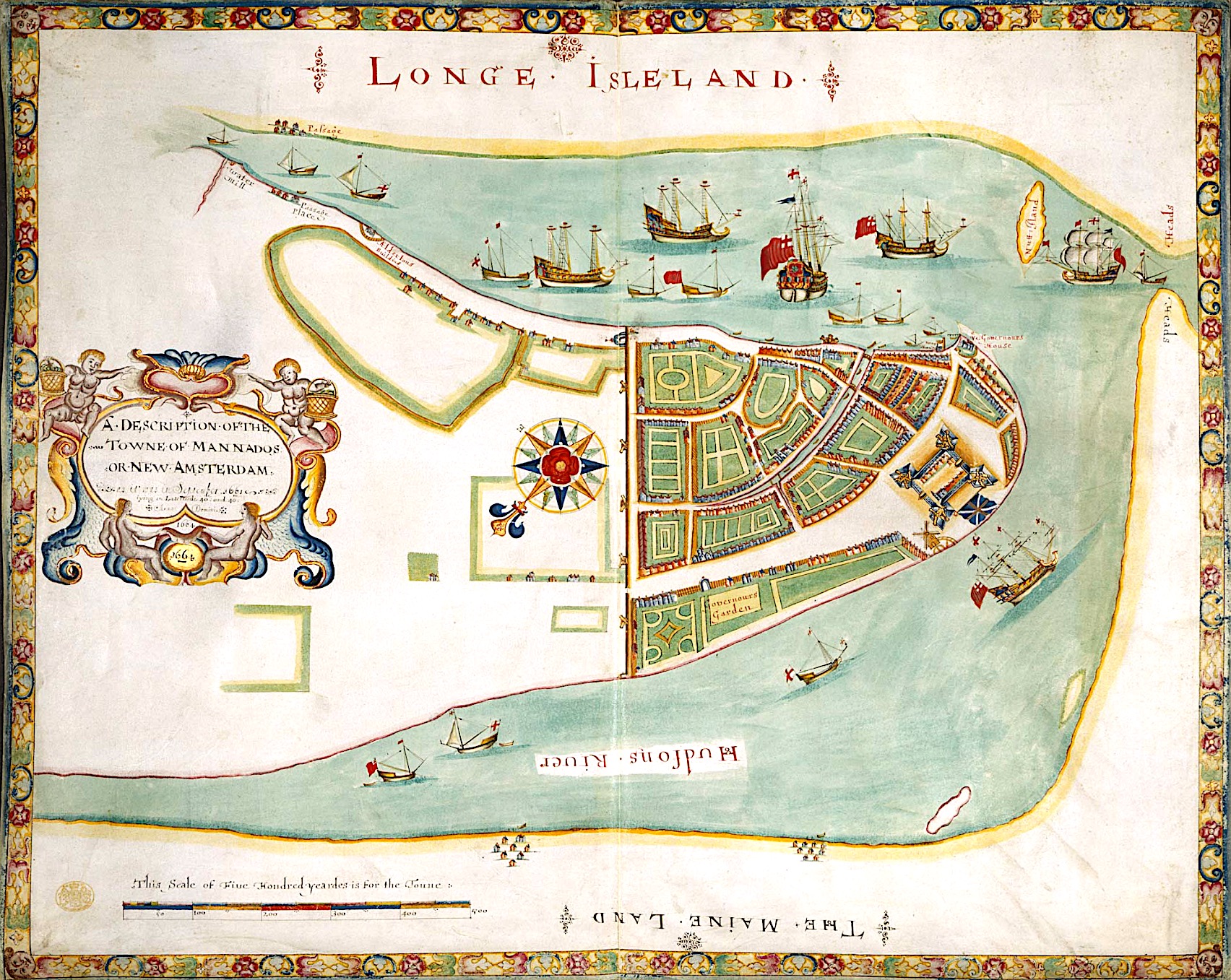
Granted to Captain John Manning, and later passed by marriage to his stepdaughter's family — the Blackwells.
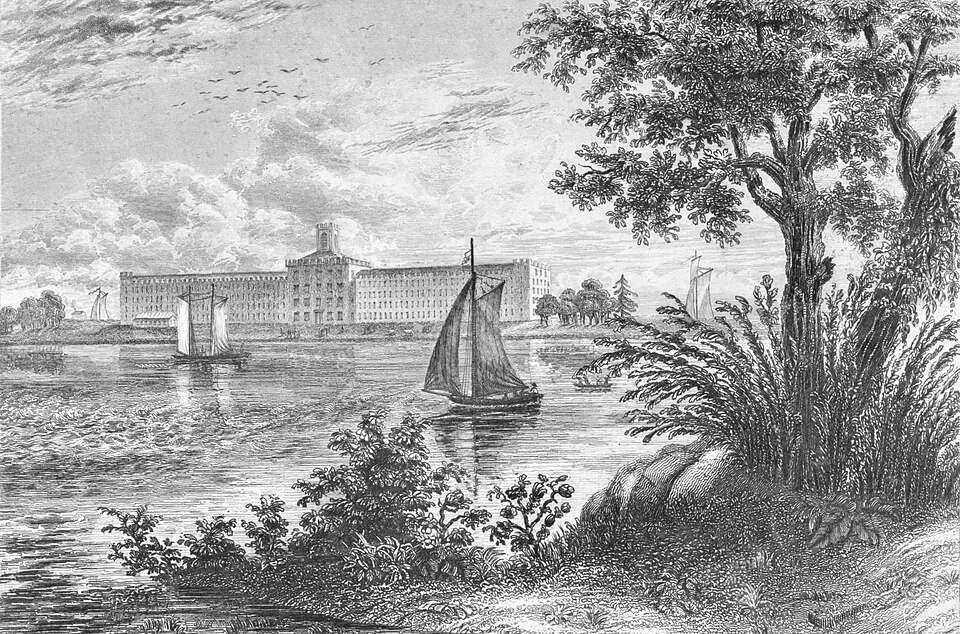
A working farm for a century. The City bought it in 1828 and filled it with a penitentiary, an almshouse, an asylum, a workhouse and hospitals.
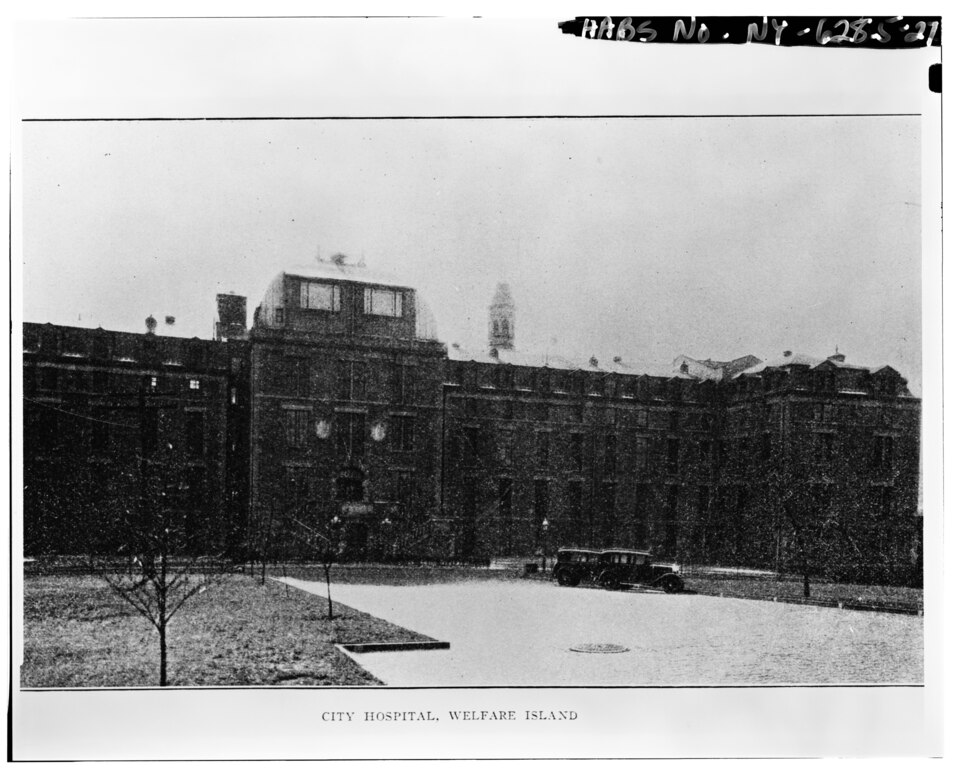
Renamed to shed the reputation. The prison closed in 1935; chronic-care hospitals stayed, and much of the island went quiet.
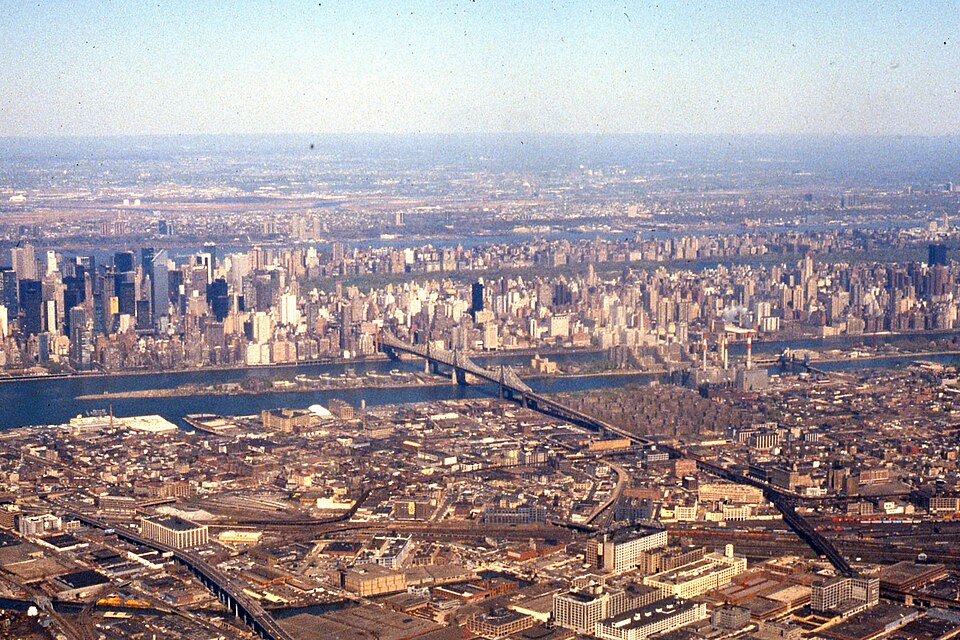
Rebuilt as a mixed-income neighbourhood on a State master plan. The Tram opened in 1976, the subway in 1989, Cornell Tech in 2017.
Early images provide period context rather than literal island views. Sources: RIHS research and Wikimedia Commons ↗.
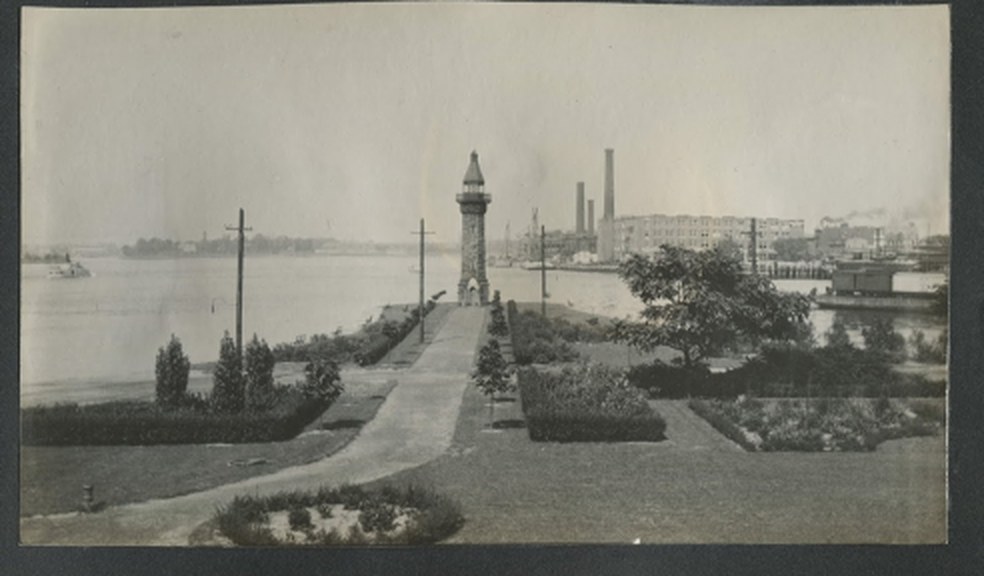
For most of the nineteenth century this was where New York sent the poor, the sick, the mad and the convicted — the four institutions Charles Dickens toured in 1842 and Nellie Bly infiltrated in 1887. Their buildings are still standing, and most of them were designed by architects the city was proud of: Alexander Jackson Davis, James Renwick Jr., Frederick Clarke Withers.
That contradiction — serious architecture built for people the city was hiding — is the story we tell at the kiosk, on our tours, and in the archive.
Landmarks
Each was designated by the New York City Landmarks Preservation Commission. Dates and architects below follow the Commission's designation reports; the full reports are linked from each entry.
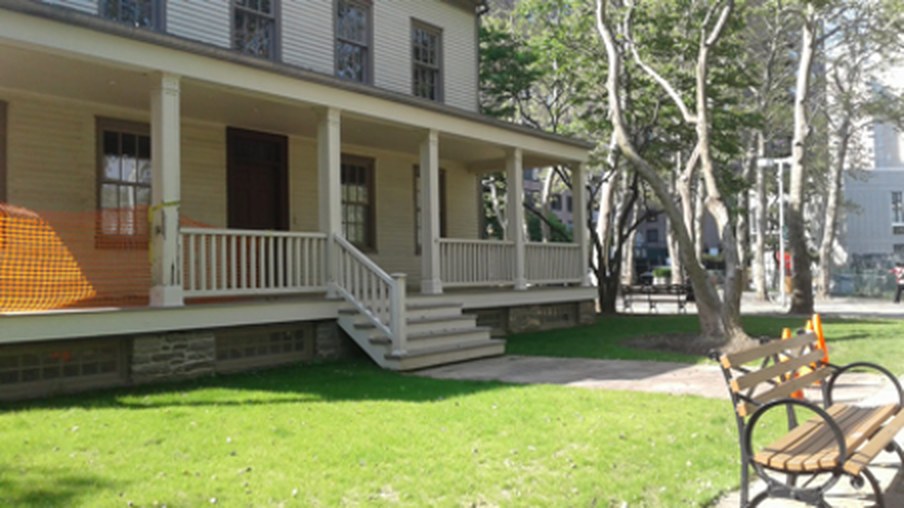 South of the tram
One of the oldest surviving farmhouses in New York City, built by the family that farmed the island for a century before the City bought it.
 Mid-island, north
The octagonal rotunda that formed the entrance to the New York City Lunatic Asylum, opened 1841 — where Nellie Bly went undercover for Ten Days in a Mad-House.
 North tip
A Gothic Revival stone lighthouse at the island's northern point, built of gneiss quarried on site and long tied to the legend of an asylum patient named John McCarthy.
 Southpoint
The "Renwick Ruin" — the only ruin ever designated a New York City landmark, and the most photographed building on the island.
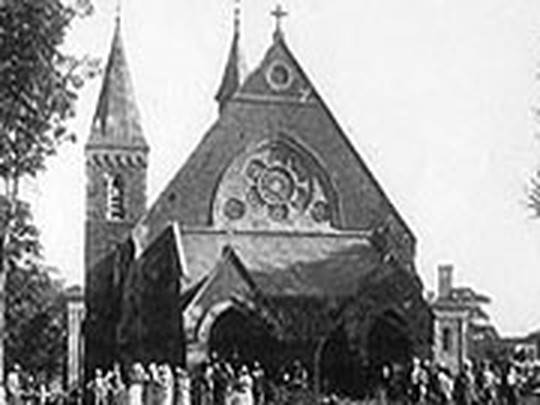 Main Street
Built for the residents of the almshouse, and still the island's gathering place — restored in the 1970s as a community centre.
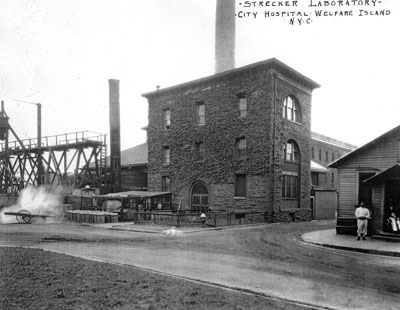 Southpoint
Built as a pathology and bacteriology laboratory for City Hospital — among the first purpose-built research laboratories of its kind in the country.
Choose a landmark above to read its designation report.
Collections & archive
Our purpose is to recover, maintain and share the record of Roosevelt Island's heritage from colonial times to the present — by collecting it, keeping it accessible, and teaching from it.
The archive is open to researchers, students, scholars and to descendants of people who were held, treated or employed here. We answer genealogy questions regularly, and we are working with the New York State Archives to preserve the record of the island community's development.
Request archive access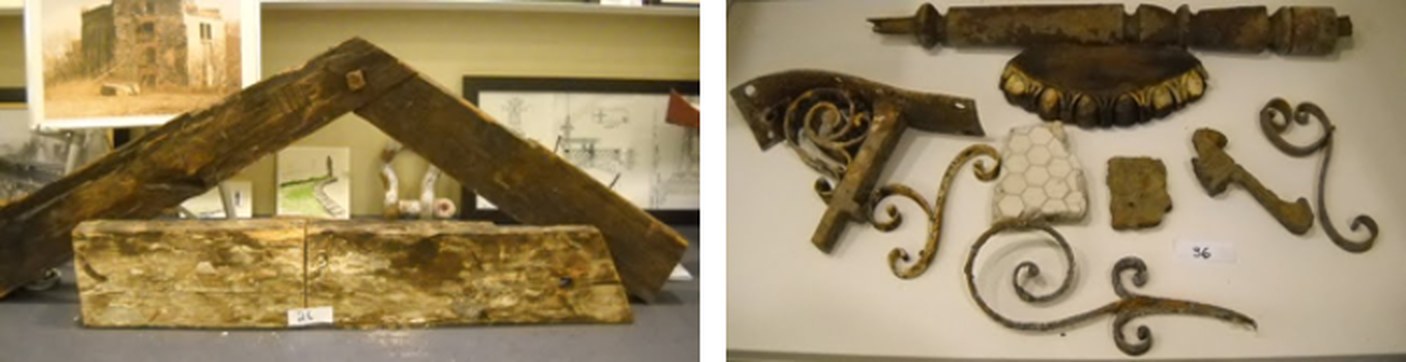
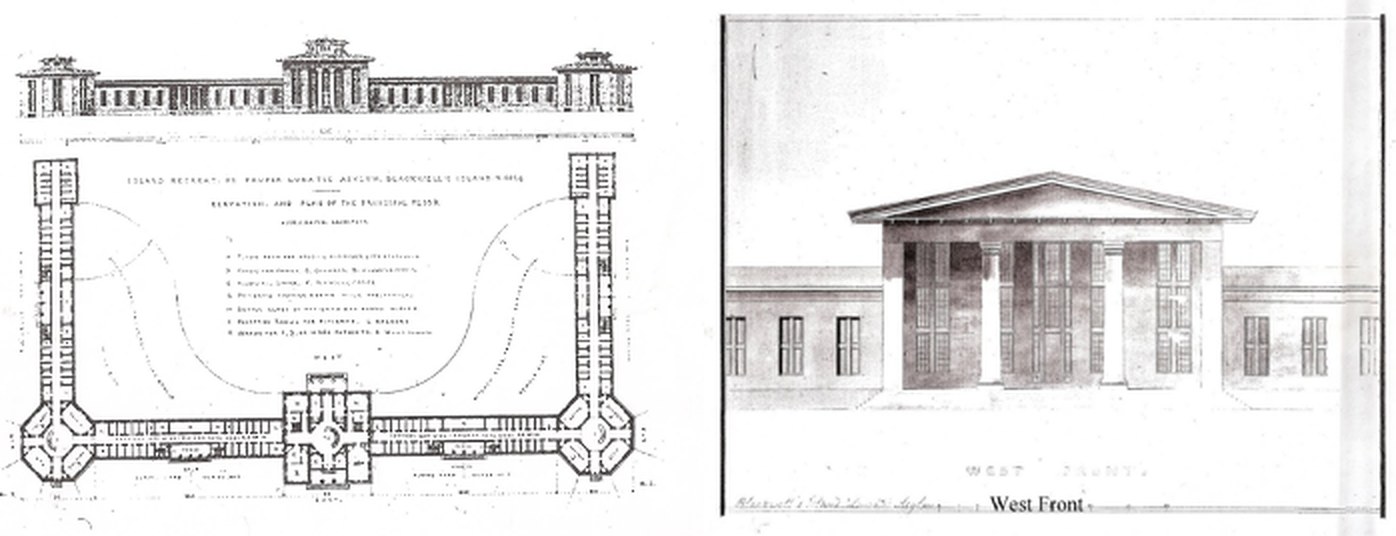
Blackwell's Almanac
Four issues a year — February, May, August and November — written by members and researchers. Every back issue is free to read.
No issues match that search.
Begun during the 2020 shutdown and never stopped: a short piece of island or New York history sent by email six times a week. The full online archive holds 1,778 posts going back to 2009.
Text by Judith Berdy. Edited by Deborah Dorff.
All 1,778 posts are stored locally and searchable by title, summary, topic and date, back to November 2009.
Nothing on this site loads from the old rihs.us — posts, images, PDFs and the walking tour are all stored here.
Programs & partners
Specialised routes led by RIHS: cherry blossoms in spring, Southpoint and the ruin, the Octagon, and Blackwell House. Groups by arrangement.
Ask about a tourA yearly series at the Roosevelt Island branch of NYPL — the island in postcards, the future of Hart Island, the woman in the iron coffin, bridge photographer Dave Frieder, Nellie Bly.
Open Door Poetry and visual arts with residents of Coler; history programs for the Carter Burden senior centre; the holiday window display at Rivercross; historic signage with Cornell Tech.
In the news
Press, broadcast and film coverage featuring RIHS, our Visitor Center and the island's landmarks.
Much of this coverage is from 2017–2018 and several of the original pages have since gone offline — The Main Street WIRE and Home & Away among them. Those now point to an archived copy so the writing is still readable.
Support us
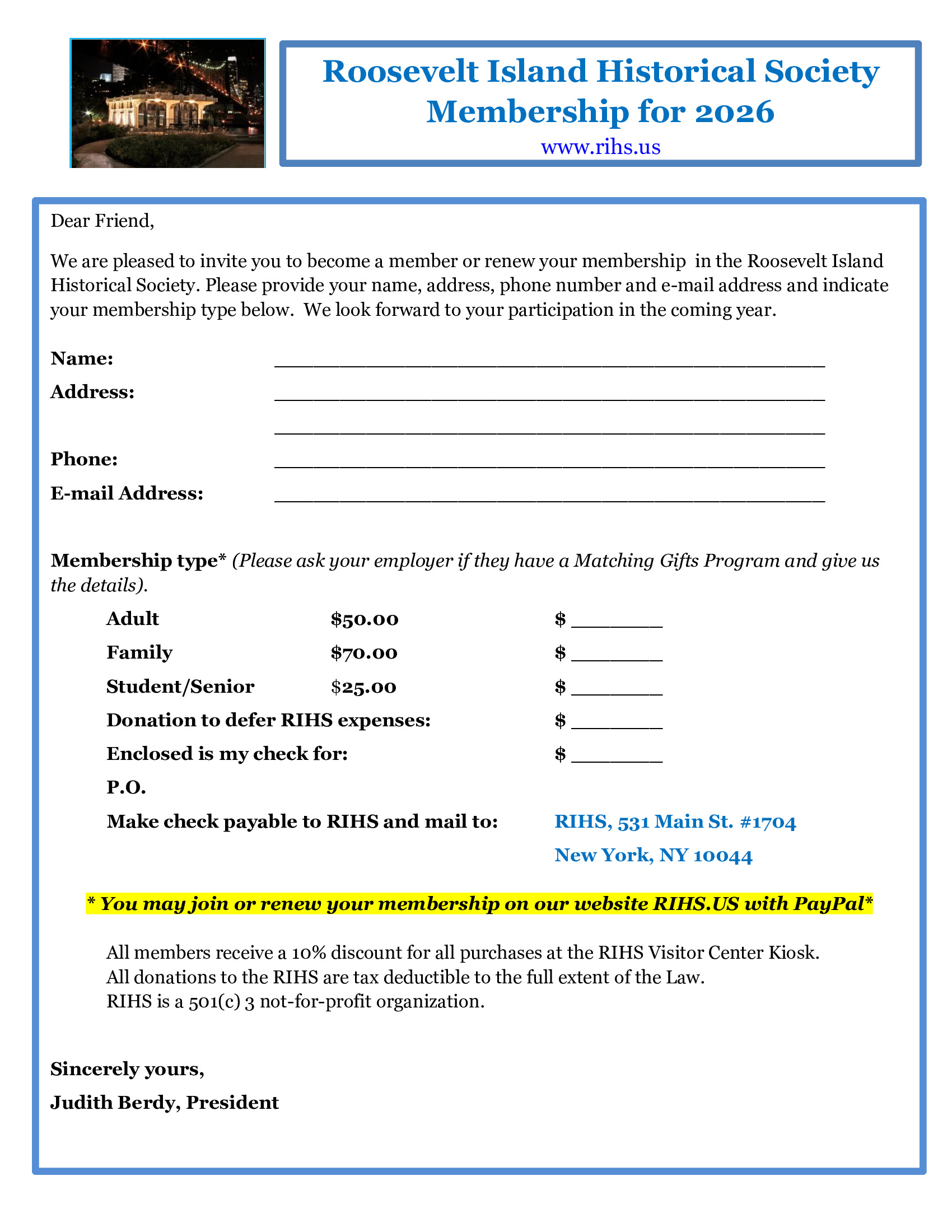
Members get our news first, an invitation to programs, and 10% off everything in the Visitor Center shop. Membership directly supports the Society's work.
per year
per year
per year
The Society's secure PayPal page accepts membership renewals and lets you enter the listed tier amount. Prefer paper, or want to give a different amount? Use the 2026 membership renewal flyer or contact the Society for payment instructions. Members receive event notices, programme invitations and 10% off at the Visitor Center.
Donations pay for archival storage, exhibit reproductions, restoration materials, and keeping a free visitor centre open six days a week. PayPal lets you choose the amount, one-time or monthly, and pay by PayPal or debit/credit card.
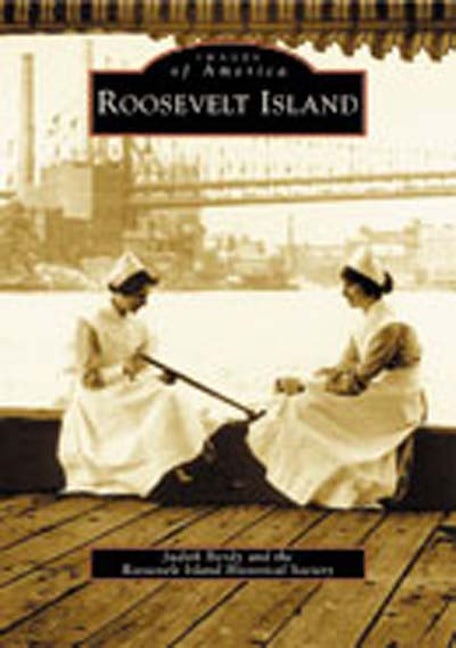
By Judith Berdy and the Roosevelt Island Historical Society. Period photographs with citations from contemporary texts, diaries and newspapers.
$25 at the Visitor Center, or $25 plus $4 shipping. Buying direct supports the Society.
ISBN 0738512389 · Arcadia Publishing
Contact
Research requests, group tours, press, donations of material, or a question about a relative who was here — all go to the same people.